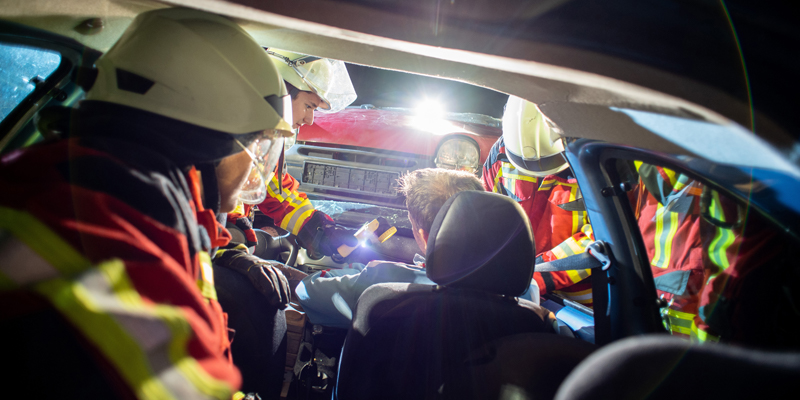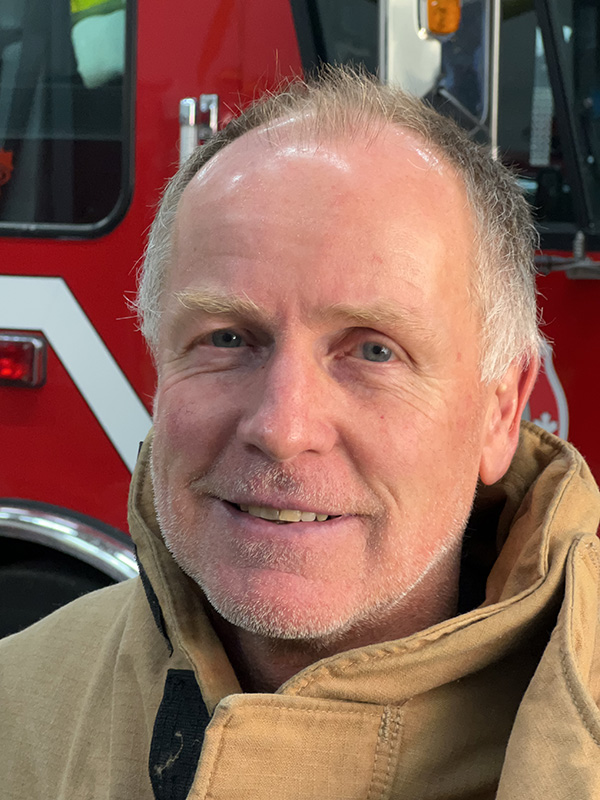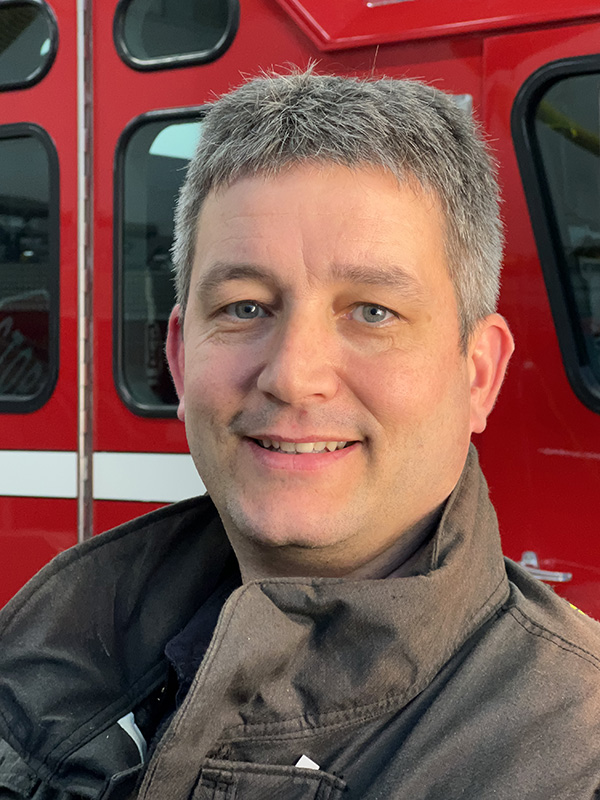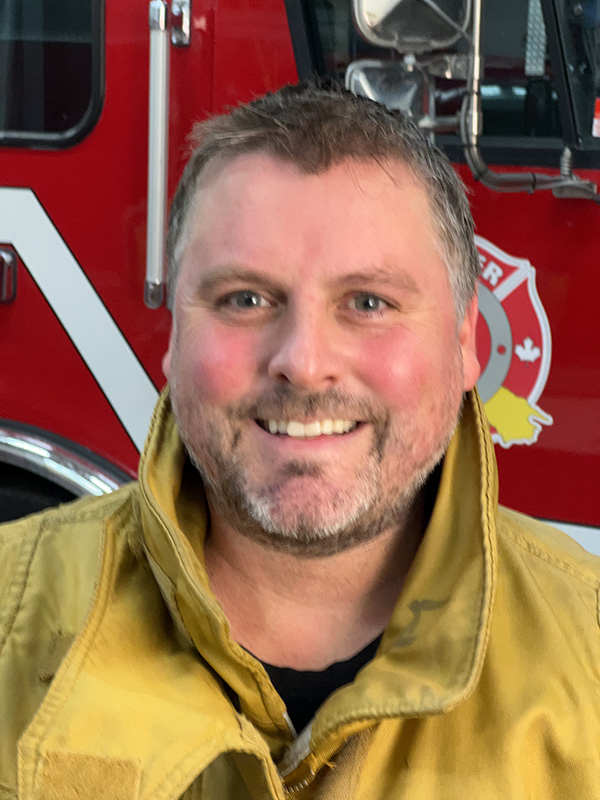
Courses are being run at Fire Hall #1 by registration only. For more information please contact Deputy Chief Mike Dine.
Emergency Training for the Frontline Workers.pdf (226K)
Click on FAQ on the right side menue to read
As your neighbour here on Pender, we’d like to help you ensure that your residence is as Fire-Safe as possible. To see a checklists to use in assessing your home please go to:
Home Fire Safety Assessment Checklist.pdf (560K)
Visitor Fire Safety Assessment Checklist.pdf (725K)
The BC Safety Authority has dubbed our very own Deputy Chief Dine a Safety Super Hero! Following is a quote from the award presentation:
“ Dine has developed a leading volunteer fire fighter training program that is recognized as a model for volunteer departments across BC... Dine does all of this and more as a volunteer because of his passions for safety and giving back to the community.”
BC Safety Authority
We are very fortunate to have such a dedicated professional leading our training and fire prevention teams. His work developing our training program has been recognized by the Fire Commissioner of BC as a model for fire departments across the Province. His passion for fire prevention serves us all. Most importantly that work ultimately keeps us and our volunteers as safe. Training is the key to keeping our volunteers safe in their efforts to protect our safety, homes and property.
Congratulations from all the gang at PIFR!
October 4, 2011
Pender Island Fire Rescue (PIFR) Chief Charlie Boyte has been named “Canada’s Volunteer Fire Chief of the Year” by the Canadian Association of Fire Chiefs.
Association President, Hamilton Fire Chief Rob Simonds, praised Boyte’s strong commitment to training that has resulted in all responding firefighters at PIFR being certified at levels often associated with full-time fire departments.
There are 3,200 volunteer fire departments across Canada that comprise 91 per cent of all departments and 77 per cent of all fire fighting personnel.
The national president also noted that “Fire Chief Boyte’s innovative job sharing program has seen the recruitment of dozens of Pender Island citizens as non-firefighter volunteers.”
The result has been a dramatic increase in community support and a 30 per cent reduction in suppression firefighters’ time in performing non-responder duties, Fire Chief Simonds said.
Chief Boyte said: “I have been given a great opportunity to nurture a culture in the fire service that honours service to people as we safeguard our communities.
“There is a lot of work to do across this nation to insure our families and communities are secure. This is especially true in rural areas where countless committed fire chiefs are struggling to maintain high standards with stretched resources.”
PIFR is also pleased to report that Deputy Chief Mike Dine has received the BC Lieutenant Governor's Public Safety Award which acknowledges "those who are dedicated to making our province a safer place to work, live and play."
January 2011
A dryer and the attached vent system requires regular cleaning and maintenance, just like your furnace or other fuel burning equipment. Lack of regular cleaning and maintenance of dryers and their attached venting systems, has been identified as causing fires.
Although lack of service can result in a fire hazard, improper dryer venting also poses a carbon monoxide risk on gas supplied dryers. The dryer vent system removes in addition to moisture, the gas by-products from your appliance to the outdoors.
When a dryer/venting system is clogged with lint, air flow is restricted, your dryer then has to work harder which leads to overheating. As the dryer ducts remove lint and moisture from clothes, not all of the lint is captured by the screen or makes it to the outdoors; this builds up on the sides of the vent system and eventually dries to a hard material. This material attracts more lint, where it eventually creates a restriction that leads to overheating, potentially resulting in a fire.
It is recommended that dryers and all fuel burning appliances are maintained or serviced on a minimum of an annual basis, or as per the Certified Appliance instructions by a Licensed, Qualified Gas Contractor. To find a local contractor in your area please visit our website at: www.safetyauthority.ca
For further information:
Wayne Lock
Provincial Gas Safety Manager
505 SIXTH STREET, SUITE 200, NEW WESTMINSTER, BRITISH COLUMBIA, CANADA V3L 0E1
Toll Free: 1-866-566-SAFE (7233) Fax: 778-396-2064
Web Site: www.safetyauthority.ca
E-mail: info@safetyauthority.ca
The Pender Island Community Wildfire Protection Plan (CWPP) has been released. It is intended to detail how wildfire risk (the potential for damage from wildfire) will be reduced on the Pender Islands. The plan provides a foundation for future collaboration, details risk assessment results, and produces an action plan for reducing wildfire risk. Agencies collaborating on this plan included Pender Island Fire Rescue, the Capital Regional District, Parks Canada, the Islands Trust, and the Ministry of Forests and Range.
To view full text please clik on the link below:
A new law requiring all older buildings and homes to have working smoke alarms went into effect Saturday, May 2, across B.C.
The changes to the B.C. Fire Code mean every private dwelling, hotel and motel room built before 1979 must have a smoke alarm.
The B.C. government says battery-operated smoke alarms are allowed in these older buildings where putting in hard-wired electrical devices might prove too difficult or expensive.
The Ministry of Public Safety states that some battery-operated smoke alarms may be less reliable than alarms that have been hard wired to a building's electrical system because they require occupant maintenance and are more easily disabled intentionally or inadvertently.
However, the significant cost of installing smoke alarms integrated with a building's electrical system is likely to discourage their installation in older buildings.
Pender residents who can't afford to equipment their dwellings with battery-operated smoke detectors can get one free at Hall #1.
Any building built after 1979 in the province already needs to have smoke alarms, and municipal bylaws in most areas govern their installation and maintenance.
Homeowners should test smoke alarms regularly and check when they were made. A smoke alarm more than 10 years old should be replaced.
Volunteers Serving
the Community
For any Emergency:
Non-Emergency: